A Mandala Design for Modern Craft Businesses
Every embroidery design that lands in my project folder gets judged by one simple, practical question: will this stitch out into something my clients will love, and will it hold up as a finished product? Today, I’m looking at Coloring Mandala Art Book 0145. It’s a graphics file, squarely in the crafts category, and my immediate task is to see how it translates from a digital preview on my screen to a real, tactile piece of embroidered art.
The First Impression: Balance and Opportunity
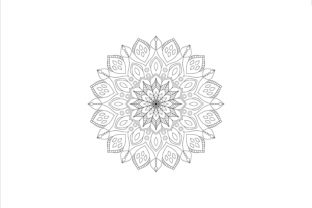
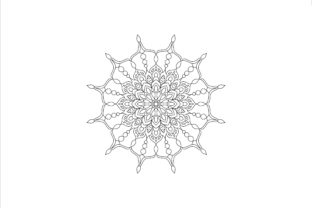
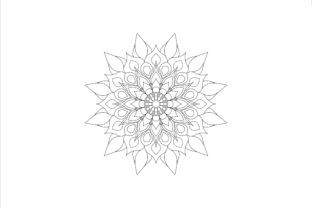
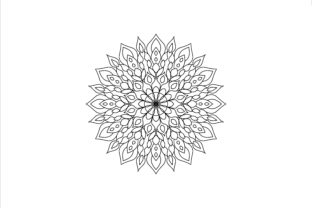
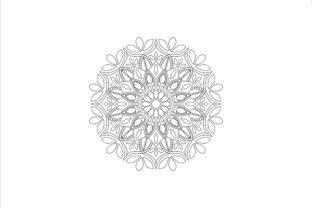
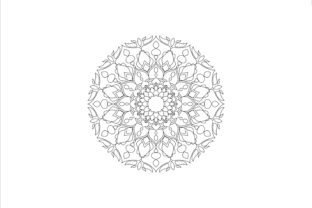
Opening the file, the mandala presents a classic, symmetrical structure. The mood it creates is one of calm focus and intricate beauty. It’s not overly busy, which is a good sign for embroidery. The layout feels balanced, with clear sections that could translate beautifully into distinct stitch areas—satin stitch for borders, fill stitches for the larger shapes, and perhaps some delicate running stitch for the finer lines. The visual personality is timeless yet adaptable, which is a goldmine for crafters. This isn’t a loud, trendy graphic; it’s a versatile art piece that could belong on a serene pillow cover for a boutique home decor line, or as a central, personalized emblem on a custom sweatshirt.
Where This Mandala Finds Its True Home
In my mind, I’m already placing it on different products. For a real-life scenario, imagine a client requesting a special wedding gift: an embroidered linen tea towel set with a unique motif. This mandala, with its elegant symmetry, would be a perfect, tasteful choice. Or, as an Etsy seller specializing in baby items, I can see this scaled down and stitched onto a cotton swaddle blanket—the intricate detail would suggest luxury and care, elevating a simple handmade product.
For apparel decorators and small shop owners, its strength is its adaptability. On a solid-color tote bag, it becomes a statement of craftsmanship. On the back of a premium cap, provided the detail level can be maintained on the curved surface, it moves from a craft to a fashion accessory. For digital product sellers creating printable mockups or offering the design as a commercial embroidery file asset, its clean structure means it will look professional in previews, building customer trust.
Performance in Real Stitching Situations
The practical value of any design lies in how it performs when the machine starts running. With Coloring Mandala Art Book 0145, the key consideration will be stitch density and clarity. The design seems to have areas that could become quite dense if programmed with heavy fill stitches. On a thick sweatshirt or a quilted pillow cover, that density would be fine, adding to a luxurious, substantial feel. However, on a baby’s delicate cotton shirt or a lightweight apron, that same density could make the fabric stiff and uncomfortable.
This is where the available file formats—AI, EPS, SVG, DXF, JPEG, PNG—become crucial. Having the vector formats means a skilled designer can adjust the design before stitching, potentially simplifying some inner details for smaller applications or for fabrics that don’t handle dense stitching well. The JPEG/PNG previews are great for creating marketing images for your craft fair products or Etsy listings, showing customers the beautiful art they’ll receive.
Caution Zones and Careful Application
Some projects require a more careful approach. I would be cautious about using this design on very small hoop sizes. The intricate details might lose their definition if shrunk too much, becoming a blur of thread. Similarly, on highly textured fabrics like a loose-knit blanket, the fine lines could get lost. On dark fabric backgrounds, the choice of thread colors becomes paramount; a mandala needs contrast to showcase its geometry, so a test on scrap fabric is essential.
For items needing frequent washing, like kitchen towels or baby clothes, the integrity of the design is paramount. Areas with tiny, concentrated stitches are more prone to wear. Simplifying the design for these use cases, or using robust stabilizer during embroidery, would be a smart move. Also, on curved surfaces like caps, the very symmetrical layout might distort unless the file is properly adapted for that specific application.
Turning a Digital File into Business Value
Beyond the stitch-out, a design like this affects your business. When a design stitches out clearly and beautifully, it enhances the perceived value of the entire product. A crisp, well-defined mandala on a tote bag speaks of professionalism and attention to detail, which builds buyer engagement and customer trust. For personalized gifts, such as a monogrammed pillow cover incorporating this mandala as a backdrop, it elevates the item from generic to truly bespoke, increasing its giftability.
For brand consistency, a boutique might use a simplified element from this mandala as a recurring motif across their line—on patches, aprons, and nursery decor—creating a recognizable aesthetic. The design’s classic nature means it won’t feel dated next season, supporting a sustainable craft business model.
Essential Designer Notes Before You Hoop Anything
Before committing this to a client project or your small shop merchandise, here’s my practiced checklist:
- Always, always test the embroidery file on a scrap of the actual project fabric first. This reveals true thread color contrast and stitch behavior.
- Review the stitch density in your software. Can you adjust fills for lighter fabrics?
- Confirm the hoop size you intend to use can accommodate the design without sacrificing detail clarity.
- Inspect the smallest details in the file. Will they survive as stitches, or should they be merged?
- Test the design in black and white mockups. How does it read without color? This helps assess its fundamental shape strength.
- Compare how it looks on light and dark fabric backgrounds in your previews. Plan your thread palette accordingly.
- Use the proper stabilizer for your target fabric. A complex design on stretchy fabric demands good stabilization.
- Crucially, check the licensing terms provided with the file. Does it allow for commercial use, for selling the finished embroidered products, or for reselling the digital file itself? Never assume.
Remember, Coloring Mandala Art Book 0145 arrives as a graphics concept. Its success as a machine embroidery design depends on your skill in translating it. It has the inherent beauty and structure to become a stunning embroidered patch, a centerpiece for holiday gifts, or a reliable asset for your commercial embroidery projects. But its final impact—the visual appeal, the stitching clarity, the handmade presentation—is forged in your practical choices before the needle even moves. Approach it with a designer’s eye for adaptation and a business owner’s eye for value, and it will reward your efforts with a truly beautiful finished product.